Contents:
- Why This Distinction Rarely Gets Explained Properly
- What a Keratin Bond Actually Is
- How Long Keratin Bonds Realistically Last
- Factors That Shorten or Extend Lifespan
- Keratin Bonds vs the Method Most Often Confused With Them: Fusion Tips
- Who Keratin Bonds Actually Suit
- What Happens Inside the Hair Shaft During Bonding
- How Bond Placement Affects Both Comfort and Appearance
- Real Example: A 14-Week Cycle
- The Sustainability Question
- Signs a Bond Cycle Is Ending Before Your Refit Date
- Practical Aftercare Tips
- FAQ
- Do keratin bonds damage natural hair?
- Can keratin bonds be reapplied to the same hair?
- How is a keratin bond removed?
- Is cold fusion better than traditional keratin bonding?
- How many bonds are needed for a full head?
A single strand of healthy human hair can support roughly 100 grams of weight before it snaps — a fact most people never think about until they’re deciding whether their hair can handle extensions. That number matters more than any marketing claim, because it’s the physics behind why keratin bond hair extensions work when applied correctly and fail when they aren’t. Keratin bonds distribute weight across dozens of small, individually fused points rather than one continuous strip, which is precisely why this method has become the benchmark against which every other hair extension beauty salon technique gets measured.
Why This Distinction Rarely Gets Explained Properly
Most salon websites describe keratin bonds in marketing language — “seamless,” “undetectable,” “premium” — without ever explaining the underlying mechanism a client is actually paying for. That gap in explanation is exactly why so many first-time clients arrive at a consultation with no real basis for comparing one studio’s bonding process against another’s, beyond price and photos. Understanding the mechanism itself, not just the marketing description of the result, is what turns a client from a passive buyer into someone who can ask genuinely useful questions.
What a Keratin Bond Actually Is
A keratin bond is a small, pre-formed tip made of hydrolysed keratin protein — the same structural protein that makes up the natural hair shaft — melted onto a section of extension hair. During application, a stylist uses a heated tool, typically running between 180°C and 220°C, to soften the keratin tip and fuse it around a small section of the client’s natural hair, close to but not touching the scalp. Once cooled, the bond hardens into a smooth, rounded nub roughly the size of a grain of rice, strong enough to hold the extension strand securely for months but flexible enough to move naturally with the hair.
How Long Keratin Bonds Realistically Last
Under normal conditions, a well-applied set of keratin bonds lasts 3 to 4 months before the natural hair growth pushes the bond too far from the scalp to look tidy. This isn’t the extension “wearing out” — the bond itself typically stays structurally intact well beyond that point. What ends the cycle is hair growth: roughly 1 to 1.5 cm per month means that after 12 to 16 weeks, the bond has moved noticeably down the strand, creating a gap at the root that needs addressing through a refit rather than a full reapplication.
Factors That Shorten or Extend Lifespan
- Hair growth rate — faster-growing hair needs more frequent refits
- Product use — oil-based conditioners applied near the root soften keratin bonds prematurely
- Heat styling habits — repeated direct heat near the bond weakens its structure over time
- Application quality — bonds applied with excessive heat or incorrect sectioning fail faster and can damage the natural strand underneath
Keratin Bonds vs the Method Most Often Confused With Them: Fusion Tips
Many clients ask for “fusion extensions” without realising that classic hot fusion and keratin bonding are, in most UK salons, the same underlying technology described with different marketing names. The real distinction worth knowing is between hot keratin bonds and cold fusion (ultrasonic) bonds. Hot bonds use direct heat from a bonding tool and have a slightly firmer hold with a longer track record; cold fusion uses ultrasonic vibration to soften the keratin tip without direct thermal contact, which reduces heat stress on already-fragile hair but typically costs more per application and requires a technician trained specifically on the ultrasonic tool. For most healthy hair, standard heat-applied keratin bonds — the method used at keratin bonds specialists like Ivana Farisei — remain the more widely available and cost-effective choice, while cold fusion suits colour-damaged or chemically treated hair that can’t tolerate additional heat.
Who Keratin Bonds Actually Suit
Keratin bonds work best on medium to thick hair with reasonable structural integrity, because the bond needs enough natural strand to grip securely without pulling on the follicle. They’re a poor match for very fine, brittle hair or hair that’s already heavily chemically processed, since the bonding heat adds further stress to a shaft that’s already compromised. Ivana Farisei’s stylists routinely assess hair density and elasticity before recommending bonds over a gentler alternative like tape-ins, and that pre-consultation step is exactly what separates a studio that protects long-term hair health from one that applies whatever the client asks for regardless of suitability.
What Happens Inside the Hair Shaft During Bonding
Keratin itself is a fibrous structural protein, the same building block that forms fingernails and the outer cuticle layer of every hair strand. When a bonding tool heats a keratin tip to its softening point, the protein temporarily loses rigidity without breaking down chemically, allowing it to wrap and re-harden around the natural strand as it cools. This is fundamentally different from a chemical adhesive, which relies on a separate bonding agent rather than reshaping a protein that’s already compatible with the hair’s own structure. That compatibility is part of why well-applied keratin bonds tend to feel less foreign against the scalp than tape or ring-based methods, particularly for clients wearing extensions for the first time.
How Bond Placement Affects Both Comfort and Appearance
Sectioning technique matters as much as the keratin itself. Bonds placed in straight, uniform rows create a visible grid pattern that shows through when hair is pulled back, and concentrate tension along predictable lines that some clients find uncomfortable during the first week. A staggered, brick-like placement pattern — checking that no two adjacent bonds sit at the same height — distributes weight more evenly across the scalp and avoids the “railroad track” look that gives lower-quality applications away instantly under bright light. This single technical choice, more than the brand of keratin used, tends to separate a comfortable, natural-looking set from one that needs constant adjusting.
Real Example: A 14-Week Cycle
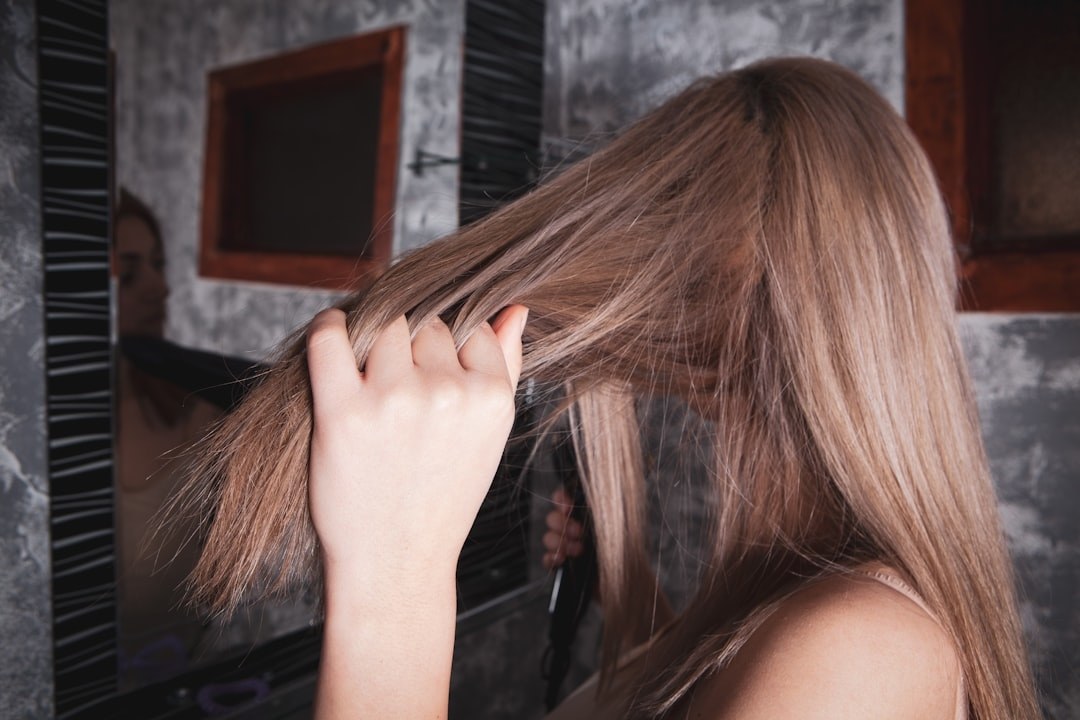
Consider a typical client with mid-length, medium-density hair getting a full head of 100 bonds applied in January. By week 6, the bonds are still sitting close to the scalp and completely undetectable. By week 10, roughly a centimetre of new growth has appeared above each bond, invisible when hair is worn down but noticeable when pulled into a tight ponytail. By week 14, most clients book a refit — the existing bonds are removed with a specialised solvent, the same extension hair is re-bonded closer to the scalp, and the cycle restarts. This is the standard rhythm Ivana Farisei’s regular clients follow, refitting roughly three to four times a year.
The Sustainability Question
Because the extension hair itself, not just the bond, can typically be reused across two or even three bonding cycles when handled by an experienced technician, keratin bonds are one of the more sustainable extension methods on the market — provided the hair is ethically sourced in the first place. Single-donor human hair, collected with proper consent and traceability, holds up structurally far better through repeated cycles than blended or lower-grade bundles, which tend to shed and tangle after a single wear and end up discarded. Salons that reuse extension hair across refits, rather than selling a fresh set every time, meaningfully reduce the churn of hair waste associated with the wider extensions industry.
Signs a Bond Cycle Is Ending Before Your Refit Date
Beyond the standard 12-to-16-week window, a handful of physical signs indicate a bond is nearing the end of its comfortable cycle regardless of the calendar. A bond that swivels loosely on the strand rather than sitting fixed usually means the natural hair above it has thinned slightly through normal shedding, a completely typical process that simply requires a slightly earlier refit. Visible fraying at the edge of the keratin nub, rather than a smooth rounded surface, suggests the bond has been exposed to more heat or product than it was designed to tolerate. Noticing either sign early and booking a refit proactively avoids the alternative — a bond that eventually slips out on its own, sometimes taking a few natural hairs with it.
Practical Aftercare Tips
- Brush from the ends upward, never starting at the root, using a loop brush designed for extensions
- Avoid conditioner or oil directly at the bond for the first two weeks after application
- Sleep with hair loosely plaited or in a low bun to prevent bonds tangling overnight
- Skip high-heat styling tools directly on bonded sections; use a heat protectant when styling nearby
FAQ
Do keratin bonds damage natural hair?
Applied correctly by an experienced stylist, keratin bonds cause minimal damage. Damage typically results from over-tight sectioning, excessive heat, or improper removal rather than the method itself.
Can keratin bonds be reapplied to the same hair?
Yes — the same extension hair can usually be reused for two to three bonding cycles if it remains in good condition, which is one reason ethically sourced, high-quality hair is worth the higher upfront cost.
How is a keratin bond removed?
A specialised bond-remover solution, applied with gentle pressure using pliers designed for the job, softens the keratin so it slides off without pulling on the natural strand.
Is cold fusion better than traditional keratin bonding?
Cold fusion reduces heat exposure and suits already-damaged hair, but traditional heat-applied bonds are generally more widely available, faster to apply, and just as durable for healthy hair.
How many bonds are needed for a full head?

Most full-head applications use between 100 and 150 bonds, depending on natural hair density and the amount of volume the client wants.
Understanding the actual mechanics behind keratin bonds — what they’re made of, how they age, and what shortens their lifespan — makes it much easier to have a productive first conversation with a stylist rather than simply picking a method because it’s trending. The clients who get the best long-term results tend to be the ones who ask about bond composition and refit rhythm before they ever sit in the chair.




Be First to Comment